Lip Filler Swelling: Why Every Practitioner Needs To Understand The Cause
5 minute read
Back to blog
You have a client with one lip puffier than the other, or unexpectedly firm, and they are asking if this is normal. Swelling after lip filler is common, but the cause matters for safety, aftercare and follow up. Practitioners who can quickly separate expected post-procedure oedema from inflammatory, infective or product-related problems will give better advice, reduce unnecessary anxiety, and escalate earlier when needed. The free lip swelling course from The Gorgeous Clinic Academy is designed as a focused clinical primer to sharpen that judgement.
Lip Filler Swelling: Why Every Practitioner Needs To Understand The Cause, What It Means
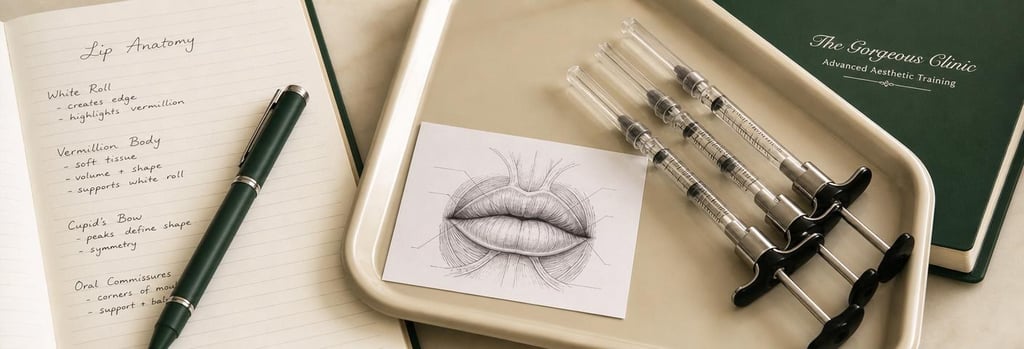
Immediate swelling after lip filler is usually procedural oedema. Needle trauma, tissue distension and local anaesthetic together cause predictable puffiness that peaks in 24 to 72 hours. This is the common pattern most clients and practitioners will see and it usually settles with conservative aftercare.
That normal post-procedure swelling is different from uneven or prolonged swelling that signals a specific cause. When one side is markedly larger, or swelling appears after several days, think beyond simple oedema. The difference in cause changes clinical actions: reassurance and routine care for expected swelling, or closer monitoring, medication review, and possibly urgent review for complications.
That normal post-procedure swelling is different from uneven or prolonged swelling that signals a specific cause. When one side is markedly larger, or swelling appears after several days, think beyond simple oedema. The difference in cause changes clinical actions: reassurance and routine care for expected swelling, or closer monitoring, medication review, and possibly urgent review for complications.
1
NHS Cosmetic procedures: aftercare and complications - NHS (2024)
2
MHRA Injectable guidance - MHRA (2023)
Common Causes
Practitioner-facing triage begins with likely causes: mechanical trauma, product placement, lidocaine-related swelling, and acute inflammatory response. Trauma from the needle or overaggressive massage can cause local haematoma and prolonged swelling. Incorrect depth or bolus placement can distort tissue planes and produce asymmetry that looks like swelling but is actually product contour.
Lidocaine within filler can cause temporary vasodilation and transient puffiness immediately after treatment. Inflammatory reactions to filler material, though less common with modern hyaluronic acid, can present several days later with firmness and redness. Identifying which of these is most likely directs appropriate aftercare and follow-up timing.
Lidocaine within filler can cause temporary vasodilation and transient puffiness immediately after treatment. Inflammatory reactions to filler material, though less common with modern hyaluronic acid, can present several days later with firmness and redness. Identifying which of these is most likely directs appropriate aftercare and follow-up timing.
1
British Association of Dermatologists Injectable fillers overview - BAD (2022)
Infective And Delayed Reactions
Infection is uncommon but a critical red flag. Early infection tends to present with increasing pain, spreading erythema, warmth and possible systemic features. Delayed onset swelling that develops days to weeks later raises concern for low-grade infection, biofilm formation, or delayed inflammatory nodules. These scenarios call for urgent review, possible swabs, and liaison with the client’s prescriber or a medical colleague.
Herpes simplex activation is another recognised cause of delayed perioral swelling and crusting in susceptible clients. Prophylaxis for known recurrent cold sores is a sensible discussion at consultation. Documenting previous cold sore history and advising early antiviral review will reduce surprises and poor outcomes.
Herpes simplex activation is another recognised cause of delayed perioral swelling and crusting in susceptible clients. Prophylaxis for known recurrent cold sores is a sensible discussion at consultation. Documenting previous cold sore history and advising early antiviral review will reduce surprises and poor outcomes.
1
NICE Infection control and clinical guidelines - NICE (2021)
2
British Association of Dermatologists Cold sores and herpes guidance - BAD (2020)
Asymmetry And Red Flags
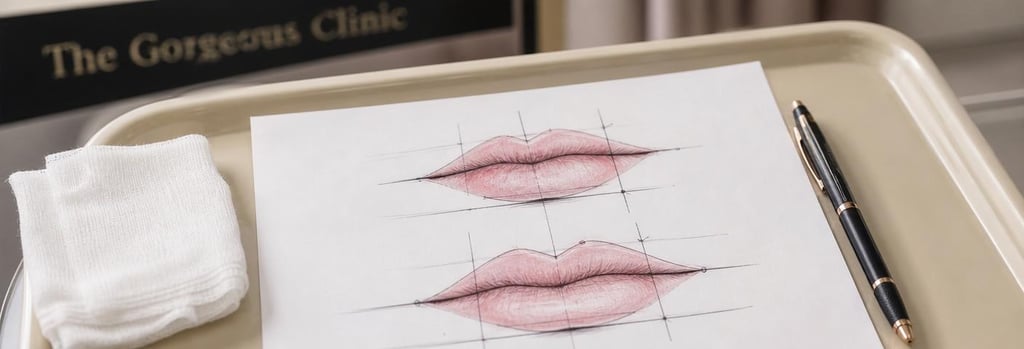
Uneven lip swelling is common, but asymmetry that is painful, expanding, or accompanied by skin discolouration requires urgent attention. Vascular compromise is rare in lips, but signs such as severe pain out of proportion, blanching, livedo or delayed capillary refill need immediate escalation and should prompt vascular occlusion protocols within the practitioner’s governance and insurance boundaries.
Other red flags include fever, progressive hardness, or persistent nodularity after two weeks. If you are uncertain, review early rather than later. The goal is safer judgement, not defensive overtreatment. The free lip swelling course helps clinicians recognise these red flags and decide when to escalate to a prescriber or emergency pathway.
Other red flags include fever, progressive hardness, or persistent nodularity after two weeks. If you are uncertain, review early rather than later. The goal is safer judgement, not defensive overtreatment. The free lip swelling course helps clinicians recognise these red flags and decide when to escalate to a prescriber or emergency pathway.
1
JCCP Standards for aesthetic practice - JCCP (2022)

Practical Aftercare And Training
Good aftercare starts at consultation. Document cold sore history, medication, allergies and recent dental work. Give realistic expectations about 24 to 72 hour swelling, and advise cryotherapy, elevation when sleeping and simple analgesia where appropriate. For delayed or asymmetric swelling advise prompt review rather than a wait-and-see approach.
Online learning can improve pattern recognition and confidence without replacing hands-on mentorship. The free lip swelling course is a concise primer to sharpen triage, aftercare messaging and escalation decisions. For those wanting broader facial injectable context, consider linking treatment planning with our dermal filler overview [[LINK:hyaluronic-acid-dermal-filler|Dermal Filler: Lower 2/3 of Face]]. If your basic training left you wanting more depth, The Gorgeous Clinic Academy can help you build the next layer.
Online learning can improve pattern recognition and confidence without replacing hands-on mentorship. The free lip swelling course is a concise primer to sharpen triage, aftercare messaging and escalation decisions. For those wanting broader facial injectable context, consider linking treatment planning with our dermal filler overview [[LINK:hyaluronic-acid-dermal-filler|Dermal Filler: Lower 2/3 of Face]]. If your basic training left you wanting more depth, The Gorgeous Clinic Academy can help you build the next layer.
Ready to grow?
Our academy is free to join, and we have some incredible resources for every practitioner from beginner to expert.
View Courses
Whatsapp Our Booking Team