Advanced Lip Filler Training: When Are You Ready?
5 minute read
Back to blog
You may feel confident with basic lip filler but unsure when to take the next step. Advanced training is not about bigger lips, it is about better judgement. Before progressing you should already read anatomy beneath the lip, anticipate tissue behaviour, manage patient expectations and handle complications safely. This piece gives a practical readiness checklist, highlights common gaps left by beginner courses, and explains what advanced education realistically adds to clinical skill and patient safety. Think of the masterclass as refinement, not a shortcut.

Advanced Lip Filler Training: When Are You Ready?, What readiness means
Readiness for advanced lip filler training is clinical competence, not bravado. You should already be comfortable with basic injection techniques, informed consent and simple complication recognition. Advanced work asks for added judgement: choosing when to treat, when to defer, and when to dissolve.
A useful mental checklist: you can identify lip blood supply on palpation, judge thin versus thick vermilion borders, and explain realistic outcomes to patients. If any of those feel shaky, further supervised practice or targeted revision is a better next step than a fast-track masterclass.
A useful mental checklist: you can identify lip blood supply on palpation, judge thin versus thick vermilion borders, and explain realistic outcomes to patients. If any of those feel shaky, further supervised practice or targeted revision is a better next step than a fast-track masterclass.

Core knowledge to master first
Advanced techniques rely on deeper anatomy. Know the orbicularis oris layering, the inferior and superior labial arteries, and the relationship between mucosa, vermilion and white roll. That knowledge changes where you place product and whether you choose needle or cannula.
Equally important is tissue assessment. Can you tell thin atrophic lips from well-hydrated but deflated lips? Do you recognise scarred or previously overfilled tissue where filler may behave unpredictably? These are the foundation skills an advanced lip filler course will build on, not teach from scratch.
Equally important is tissue assessment. Can you tell thin atrophic lips from well-hydrated but deflated lips? Do you recognise scarred or previously overfilled tissue where filler may behave unpredictably? These are the foundation skills an advanced lip filler course will build on, not teach from scratch.
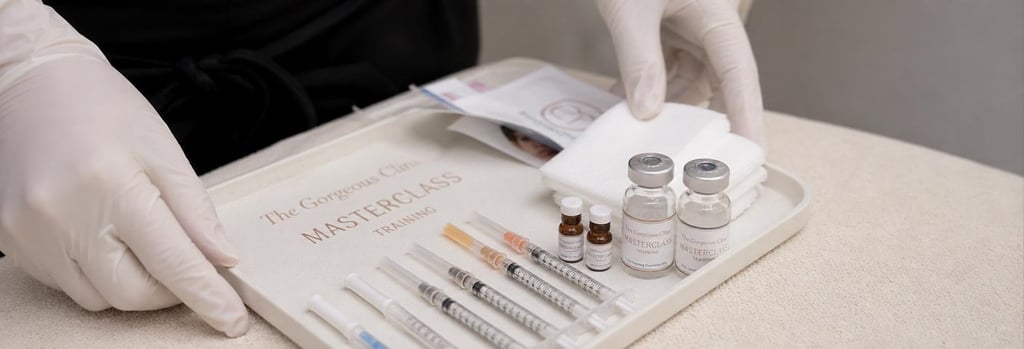
Practical skills and clinical judgement
Advanced training focuses on decision-making: proportion over volume, tailoring technique to tissue quality, and sequencing treatments. Expect to refine injection vectors, layering strategies and subtle border definition, while avoiding overcorrection.
Swelling patterns and migration need particular attention. You must predict immediate post-treatment oedema and explain staged results. Learning to plan around likely migration keeps outcomes natural and reduces the need for corrective work. Hands-on practice with supervised feedback is essential; watching a video is not enough.
Swelling patterns and migration need particular attention. You must predict immediate post-treatment oedema and explain staged results. Learning to plan around likely migration keeps outcomes natural and reduces the need for corrective work. Hands-on practice with supervised feedback is essential; watching a video is not enough.

Complication awareness and dissolving
Complication preparedness is non-negotiable before advanced procedures. You should recognise early vascular compromise signs, have hyaluronidase access and know local escalation pathways. Practical dissolving skills are taught in advanced courses, but initial competence with conservative dissolving and recognising when to refer is expected.
Make sure your clinic systems cover emergency supplies, clear documentation, and aftercare protocols. National guidance on injectable complications and reporting remains the clinical backstop and should be familiar to you [1].
Make sure your clinic systems cover emergency supplies, clear documentation, and aftercare protocols. National guidance on injectable complications and reporting remains the clinical backstop and should be familiar to you [1].
1
NHS — How to report problems with cosmetic procedures - NHS (https://www.nhs.uk) - 2024
2
MHRA — Medical device vigilance reporting - MHRA (https://www.gov.uk) - 2023

Choosing the right course
A good advanced lip filler course blends targeted theory, anatomy review and supervised hands-on practice. Look for courses that set entry criteria, limit delegate numbers for meaningful feedback, and provide post-course support. Advanced training should be framed as refinement, not permission to take risks.
Check that the provider covers realistic consent conversations, complication management and staged treatment planning. If your basic training left gaps in lower-face filler planning, a linked technical module such as a dermal filler lower-face course can be useful reading before you book [[LINK:hyaluronic-acid-dermal-filler|Dermal Filler: Lower 2/3 of Face]]. If your basic training left you wanting more depth, The Gorgeous Clinic Academy can help you build the next layer.
Check that the provider covers realistic consent conversations, complication management and staged treatment planning. If your basic training left gaps in lower-face filler planning, a linked technical module such as a dermal filler lower-face course can be useful reading before you book [[LINK:hyaluronic-acid-dermal-filler|Dermal Filler: Lower 2/3 of Face]]. If your basic training left you wanting more depth, The Gorgeous Clinic Academy can help you build the next layer.
1
JCCP — Standards for Aesthetic Practice - JCCP (https://www.jccp.org.uk) - 2022
Ready to grow?
Our academy is free to join, and we have some incredible resources for every practitioner from beginner to expert.
View Courses
Whatsapp Our Booking Team