When Basic Aesthetics Training Isn’t Enough
6 minute read
Back to blog
You passed a beginner aesthetics course, gained a certificate and felt relieved. Then real clinic life arrived: varied faces, tricky anatomy, unexpected reactions and clients who want natural but different. That common wobble between qualification and confident practice is not a personal failure. It is usually a gap in training. This piece explains what beginner courses typically cover and where they fall short, so you can choose the right next step to build judgement, complication awareness and consistent outcomes.

When Basic Aesthetics Training Isn’t Enough, What Basic Courses Usually Provide
Most beginner aesthetics courses give a solid, practical starting point. Learners usually get core theory on facial anatomy, product types, basic injection techniques and legal responsibilities. Courses are often short and focused on competence in a narrow set of procedures, which is appropriate for first steps.
What these courses rarely provide is the volume of varied case experience you need to build reliable judgement. Classroom practise and a small number of supervised injections do not replicate the range of skin types, ageing patterns, medical histories and minor complications you will see in a busy clinic. That is the reason many newly qualified practitioners feel hesitant when presented with an unpredictable or high-risk case.
What these courses rarely provide is the volume of varied case experience you need to build reliable judgement. Classroom practise and a small number of supervised injections do not replicate the range of skin types, ageing patterns, medical histories and minor complications you will see in a busy clinic. That is the reason many newly qualified practitioners feel hesitant when presented with an unpredictable or high-risk case.
1
Standards for Aesthetic Practice - JCCP (https://www.jccp.org.uk) - 2020

The Anatomy And Judgement Gap
Understanding anatomy on a textbook level is not the same as reading anatomy on a live face. Layers of fat, muscle tone, scar tissue and age-related change vary widely between clients. That variation alters both risk and the response to product. Learning to translate anatomy into a safe plan takes repeated, supervised exposure and reflective feedback.
Judgement covers dose selection, treatment sequencing and when to decline or refer. These decisions are not formulaic. They rely on pattern recognition developed over many cases, plus the habit of conservative planning. Beginner courses may teach injection placement, but they rarely train the slower skill: deciding when less is more.
Judgement covers dose selection, treatment sequencing and when to decline or refer. These decisions are not formulaic. They rely on pattern recognition developed over many cases, plus the habit of conservative planning. Beginner courses may teach injection placement, but they rarely train the slower skill: deciding when less is more.
1
Patient Safety Guidance - BAAPS (https://baaps.org.uk) - 2019
Complications, Detection And Escalation
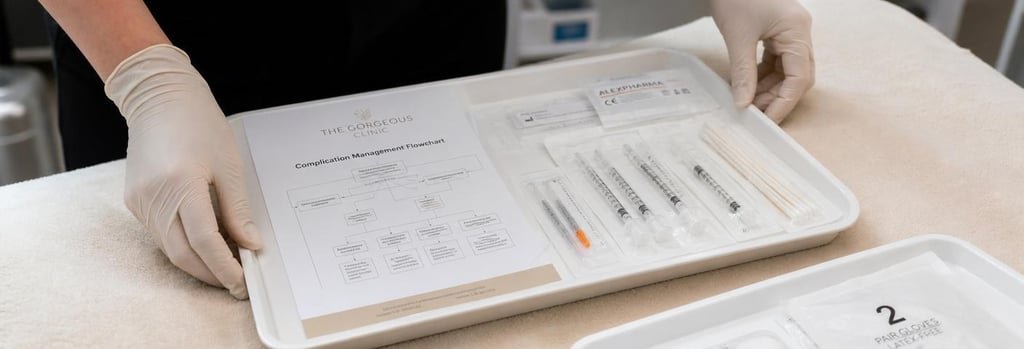
Complication awareness is where confidence and patient safety meet. Beginner courses introduce common complications and first-aid basics, but they rarely offer the depth needed to recognise early, subtle signs. Vascular events, delayed reactions, and infection can present atypically. Rapid, correct escalation reduces harm, so structured training should emphasise recognition, immediate actions, documentation and when to escalate to emergency care or a senior colleague.
Practitioners benefit from scenario-based learning, case reviews and clear protocols aligned with regional guidance. Knowing who to call, and having practised the conversation and paperwork, shortens response times and improves outcomes. For example, clear referral lines and local emergency pathways are practical safety measures every clinic should document [1].
Practitioners benefit from scenario-based learning, case reviews and clear protocols aligned with regional guidance. Knowing who to call, and having practised the conversation and paperwork, shortens response times and improves outcomes. For example, clear referral lines and local emergency pathways are practical safety measures every clinic should document [1].
1
When to Seek Emergency Care - NHS (https://www.nhs.uk) - 2024
2
Medical Device and Injectable Safety Information - MHRA (https://www.gov.uk/mhra) - 2022

Consultation, Consent And Aftercare
Good consultations do more than collect medical history. They set expectations, map realistic outcomes and create a shared plan. Beginner courses often cover the legal elements of consent, but less often the conversational skills needed to manage anxious or persuasive clients. The practical skill is listening, translating clinical risk into plain language and agreeing a staged approach.
Aftercare is where a treatment succeeds or becomes a problem. Clear written instructions, accessible follow-up and a documented escalation policy reduce both complications and complaints. Small systems matter: standardised photos, mapped treatment plans and a follow-up checklist prevent avoidable issues. If you treat lines or muscles, for example, consider cross-referring learning to specific procedure pages like [[LINK:anti-wrinkle-injections|anti-wrinkle treatments]] to build safer practice.
Aftercare is where a treatment succeeds or becomes a problem. Clear written instructions, accessible follow-up and a documented escalation policy reduce both complications and complaints. Small systems matter: standardised photos, mapped treatment plans and a follow-up checklist prevent avoidable issues. If you treat lines or muscles, for example, consider cross-referring learning to specific procedure pages like [[LINK:anti-wrinkle-injections|anti-wrinkle treatments]] to build safer practice.
1
Consent Guidance - GMC (https://www.gmc-uk.org) - 2020
Practical Next Steps For Safer Confidence
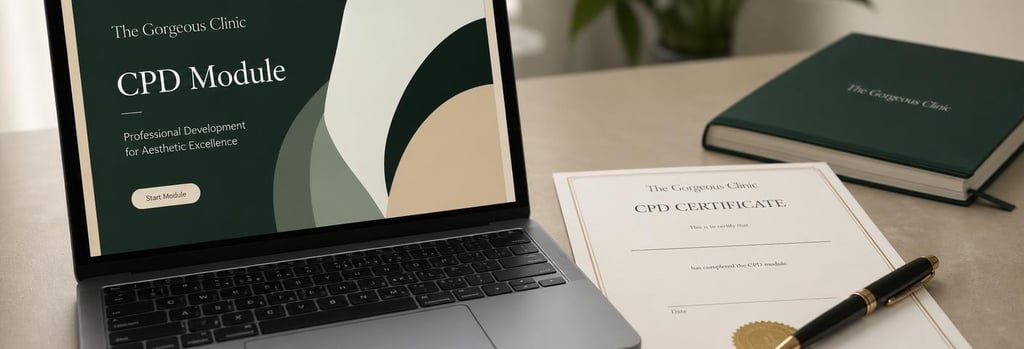
If your basic training left you with questions, structured next steps close the gap safely. Seek supervised case volume, scenario-based masterclasses and mentoring that focuses on decision-making, not just technique. Useful learning formats include e-learning modules combined with in-clinic masterclasses. These let you practise judgement, complications and consultation skills in a supported setting.
The Gorgeous Clinic Academy offers this next layer of learning for UK practitioners who want more than a checklist course. Small-group masterclasses, case clinics and CPD-aligned e-learning help build practical judgement and workplace systems. If your basic training left you wanting more depth, The Gorgeous Clinic Academy can help you build the next layer.
The Gorgeous Clinic Academy offers this next layer of learning for UK practitioners who want more than a checklist course. Small-group masterclasses, case clinics and CPD-aligned e-learning help build practical judgement and workplace systems. If your basic training left you wanting more depth, The Gorgeous Clinic Academy can help you build the next layer.
Ready to grow?
Our academy is free to join, and we have some incredible resources for every practitioner from beginner to expert.
View Courses
Whatsapp Our Booking Team