Can You Learn Lip Filler Theory Online and Safely?
5 minute read
Back to blog
You are curious about lip filler, but nervous about learning on-screen alone. Online courses can teach the clinical theory you need to make safer decisions: lip anatomy, product selection, common swelling patterns, migration risk, how to structure a consultation and recognise red flags. What they cannot replace is supervised hands-on practice. If you trained recently and want to deepen your knowledge before returning to clinical practice, focused e-learning from a clinic-experienced provider can be a sensible next step.

Can You Learn Lip Filler Theory Online and Safely?, What online theory covers
Structured online training is effective for several theoretical pillars. You can learn detailed lip anatomy, including the vermillion border, orbicularis oris relationships and the vascular map that matters for safety. You can study product classes, their rheology and how crosslinking affects behaviour in lips without being given doses or injection maps.
Modules are good for consultation structure: how to record expectations, identify contraindications and set realistic aftercare plans. They are also useful for recognising complication signs and escalation pathways so you know when to stop and seek help.
Modules are good for consultation structure: how to record expectations, identify contraindications and set realistic aftercare plans. They are also useful for recognising complication signs and escalation pathways so you know when to stop and seek help.
1
NHS cosmetic procedures - NHS (https://www.nhs.uk) - 2024

Product choice and expected responses
Online lessons can explain filler types used for lips, their typical longevity and expected short-term reactions such as oedema and ecchymosis. You can learn how hyaluronic acid fillers behave in soft, mobile tissue and why product selection matters for movement and feel.
Theory modules also cover predictable post-injection swelling timelines and factors that increase migration risk, such as overfilling, poor placement or thin tissue. This knowledge helps you plan staged treatments and sensible consent conversations with clients.
Theory modules also cover predictable post-injection swelling timelines and factors that increase migration risk, such as overfilling, poor placement or thin tissue. This knowledge helps you plan staged treatments and sensible consent conversations with clients.
1
MHRA injectable filler guidance - MHRA (https://www.gov.uk/mhra) - 2023
Complication awareness and escalation
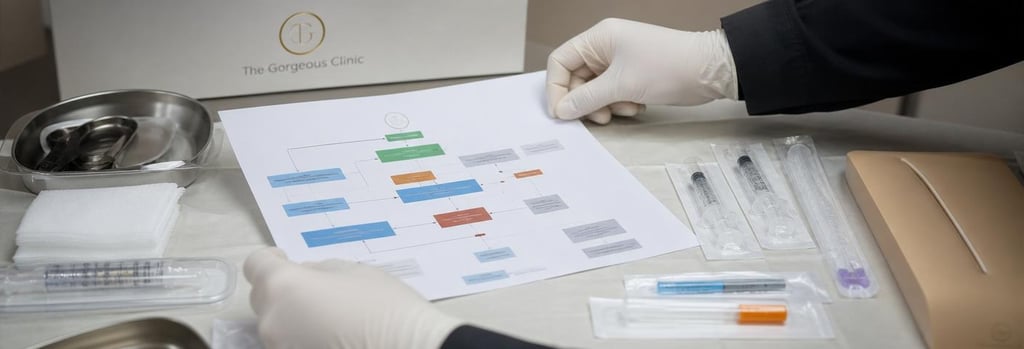
A robust online course teaches recognition of common and rare complications, and the correct immediate actions to take. You should expect to learn red flags such as sudden blanching, rapidly expanding pain, severe asymmetry and persistent nodules. There are clear modules on when to administer hyaluronidase, when to seek senior clinical support, and how to document and communicate with the client.
These modules often reference official guidance and escalation pathways so you can align clinic policy with local requirements. Practical management requires supervised clinical experience and local prescribing arrangements to act on that knowledge safely.
These modules often reference official guidance and escalation pathways so you can align clinic policy with local requirements. Practical management requires supervised clinical experience and local prescribing arrangements to act on that knowledge safely.
1
MHRA dermal filler reporting - GOV.UK (https://www.gov.uk) - 2022
2
British Association of Dermatologists cosmetic procedures - BAD (https://www.bad.org.uk) - 2021

Consultation, consent and realistic planning
Online learning can give practical templates for consultation and consent, including medical history checks, photographic documentation and how to set realistic outcomes for older clients with volume loss or asymmetry. You can practise phrasing to manage expectations and record why a conservative plan might be safer.
Good courses also cover treatment sequencing: when lips are better treated alongside perioral support such as chin or marionette planning, and when to pause and refer. For technical injection skills and clinical judgement under pressure, supervised clinics and observed practice remain essential. Consider pairing theory with a hands-on masterclass.
Good courses also cover treatment sequencing: when lips are better treated alongside perioral support such as chin or marionette planning, and when to pause and refer. For technical injection skills and clinical judgement under pressure, supervised clinics and observed practice remain essential. Consider pairing theory with a hands-on masterclass.
1
Save Face standards for injectors - Save Face (https://www.saveface.co.uk) - 2024
Where online learning fits in practice
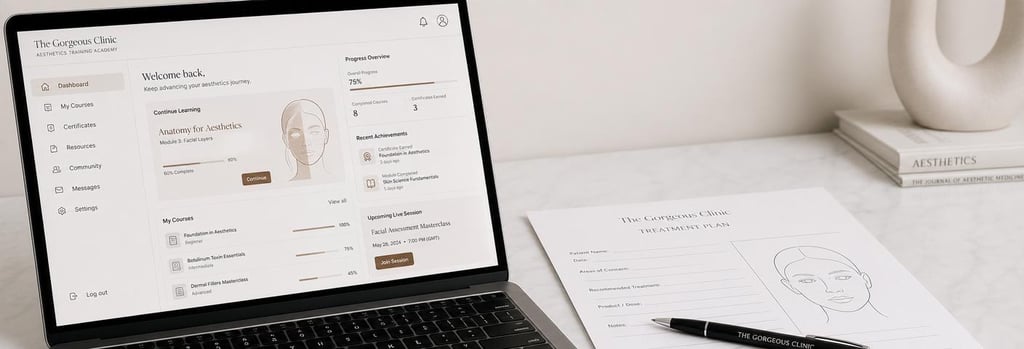
Online lip filler training is a strong complement to supervised hands-on training. It sharpens anatomy knowledge, complication awareness, consultation skills and treatment planning. It also offers a cost-effective way to revisit theory before supervised practice or to refresh knowledge between clinics.
If you want to deepen lip-specific judgement after basic training, The Gorgeous Clinic Academy offers modules designed by experienced clinicians to bridge that gap. For practical injection technique and supervised clinical competence you should attend in-person mentorship or masterclasses. If you are preparing for treatment, a consultation is the safest place to start. [[LINK:hyaluronic-acid-dermal-filler|dermal filler techniques]]
If you want to deepen lip-specific judgement after basic training, The Gorgeous Clinic Academy offers modules designed by experienced clinicians to bridge that gap. For practical injection technique and supervised clinical competence you should attend in-person mentorship or masterclasses. If you are preparing for treatment, a consultation is the safest place to start. [[LINK:hyaluronic-acid-dermal-filler|dermal filler techniques]]
Ready to grow?
Our academy is free to join, and we have some incredible resources for every practitioner from beginner to expert.
View Courses
Whatsapp Our Booking Team