Chin Filler vs Jawline Filler: Which Does Your Face Need?
Nurse Susana Gonzales
5 minute read
Back to blog
You want a fresher, more balanced lower face, but you are not sure whether your chin or your jawline needs attention. Both areas respond well to dermal filler, yet they solve different problems. Chin filler changes projection and the profile silhouette. Jawline filler creates definition, reduces jowls and sharpens the lower face angle. The right choice depends on facial proportions, skin quality and ageing patterns. A consultation clarifies which approach, or combination, will give a natural outcome that suits your face.
Chin Filler vs Jawline Filler: Which Does Your Face Need?, What each treatment does
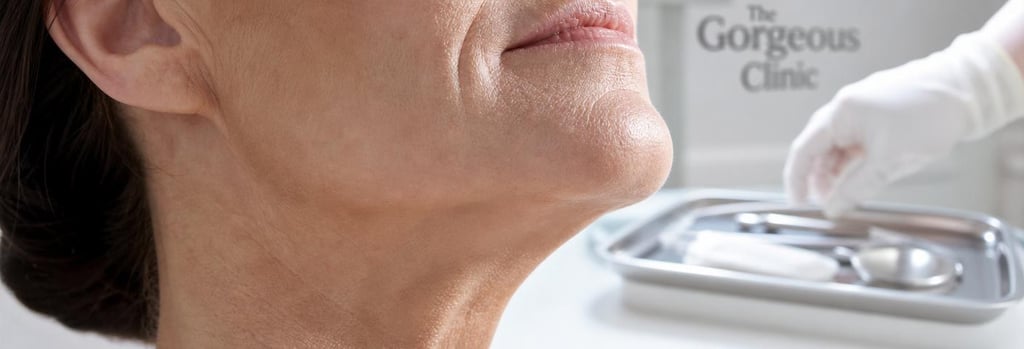
Chin filler is about projection, length and vertical balance. A small amount of hyaluronic acid can move the chin forward, reduce a weak-looking profile and improve the relationship between nose, lips and chin. It is a subtle way to correct under-projection without surgery.
Jawline filler targets the lower border of the face. The goal is definition and contour: a straighter mandibular line, stronger angle and improved support for the lower cheek and jowl area. When placed strategically, jawline filler can reduce the visual appearance of jowls by restoring structure and lifting adjacent tissue slightly.
Jawline filler targets the lower border of the face. The goal is definition and contour: a straighter mandibular line, stronger angle and improved support for the lower cheek and jowl area. When placed strategically, jawline filler can reduce the visual appearance of jowls by restoring structure and lifting adjacent tissue slightly.
How they change facial balance
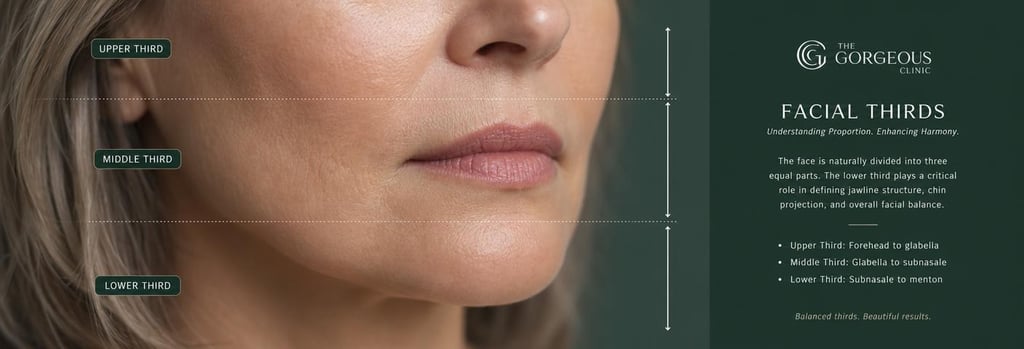
Think in thirds: the lower third of the face includes the nose tip to chin. If the chin is short, the profile looks underbalanced; adding projection lengthens that third and can reduce the look of a large nose. That is why chin filler is often used for profile refinement.
Jawline work reshapes the lower-face silhouette in frontal and three-quarter views. A defined jawline reads as younger and more structured. In many people, treating both areas together gives the most harmonious result because improving projection without addressing lateral support can expose sagging or an imbalance in the jaw angle.
Jawline work reshapes the lower-face silhouette in frontal and three-quarter views. A defined jawline reads as younger and more structured. In many people, treating both areas together gives the most harmonious result because improving projection without addressing lateral support can expose sagging or an imbalance in the jaw angle.
Who might suit each option
Chin filler suits people with under-projection, a recessed chin, or those seeking a small change to their profile without surgery. It is commonly chosen by people wishing to lengthen the lower face or soften a downturned mouth appearance. It can also complement lip or nose work.
Jawline filler suits those who want a stronger lower-face border, have early jowling, or want clearer separation between cheek and neck. If skin laxity is advanced and heavy jowls are present, filler alone may not be enough and combined approaches are often recommended.
Jawline filler suits those who want a stronger lower-face border, have early jowling, or want clearer separation between cheek and neck. If skin laxity is advanced and heavy jowls are present, filler alone may not be enough and combined approaches are often recommended.

Limits, risks and what a consultation decides
Dermal filler is not a facelift. Fillers restore volume and shape, they do not remove excess skin. If skin laxity or heavy jowls are the main issue, other treatments or surgery may be more appropriate. The consultation assesses anatomy, skin quality, medical history and realistic goals. Good clinics map the face, take photos and discuss alternatives and expected timeline.
All injectable treatments carry risks such as bruising, swelling, infection and, rarely, vascular events. UK guidance stresses choosing regulated practitioners and checking device sourcing and training. The NHS recommends asking about qualifications and complications before any cosmetic procedure [1]. The MHRA regulates dermal fillers as medical devices and provides safety alerts clinicians should follow [2].
All injectable treatments carry risks such as bruising, swelling, infection and, rarely, vascular events. UK guidance stresses choosing regulated practitioners and checking device sourcing and training. The NHS recommends asking about qualifications and complications before any cosmetic procedure [1]. The MHRA regulates dermal fillers as medical devices and provides safety alerts clinicians should follow [2].
Choosing an approach and next steps
The practical decision often comes down to a simple test in clinic: how does adding chin projection change your profile, and does adding jawline support change how soft tissues sit at rest and in motion? A conservative plan may start with small amounts in one area, then reassess at the review. Combining modest chin and jawline filler can produce balanced, natural results while avoiding overfilling.
When you visit us on the Fylde Coast we look at facial proportions, skin quality and your priorities. We sometimes recommend adjuncts such as threads or skin boosters for texture and support. If you would like in-depth lower-face filler information, see our overview of lower-face filler options [[LINK:hyaluronic-acid-dermal-filler|Dermal Filler: Lower 2/3 of Face]]. If you are considering treatment, a consultation is the safest place to start.
When you visit us on the Fylde Coast we look at facial proportions, skin quality and your priorities. We sometimes recommend adjuncts such as threads or skin boosters for texture and support. If you would like in-depth lower-face filler information, see our overview of lower-face filler options [[LINK:hyaluronic-acid-dermal-filler|Dermal Filler: Lower 2/3 of Face]]. If you are considering treatment, a consultation is the safest place to start.
Ready to connect?
All our consultations come with no obligation to book, and are pressure-free and education focused.
Book a Free Consultation
Book a Treatment
Whatsapp Message us