Is Your Masseter Causing Teeth Grinding and Jaw Tension?
5 minute read
Back to blog
You wake with a sore jaw, a headache by your temples, or your partner complains about teeth grinding. That nagging jaw ache can come from the temporomandibular joint, the surrounding muscles, or both. The masseter muscle is the chewing muscle you feel at the angle of your jaw. When it is constantly tense or enlarged it can worsen clenching, contribute to bruxism and make the lower face look wider. Here’s what realistic, clinically grounded treatment can — and cannot — do.
Jaw anatomy in plain terms
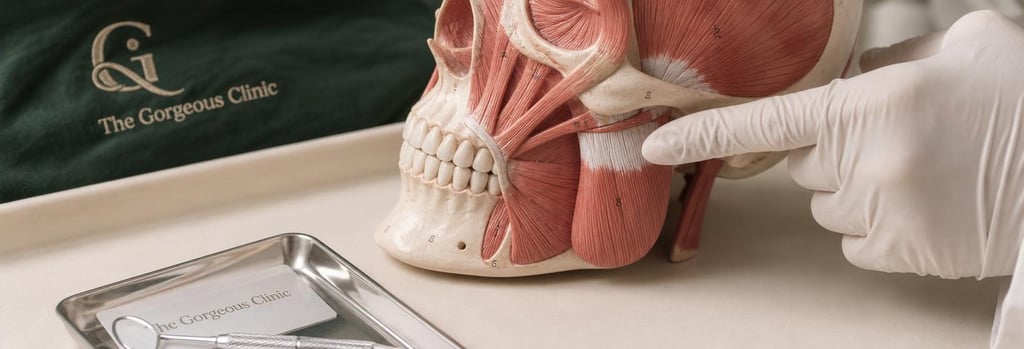
Most people use the term TMJ when searching for jaw pain, but TMJ actually means the temporomandibular joint. TMD, or temporomandibular disorder, refers to problems affecting that joint and the surrounding muscles. The joint and the chewing muscles are closely connected, but they are not the same thing.
The masseter muscle sits at the back of the lower cheek near the jaw angle. It helps you chew and clench. If that muscle is habitually tense, enlarged or overworking it can cause jaw tension, jaw ache, tension headaches and contribute to teeth grinding or bruxism.
The masseter muscle sits at the back of the lower cheek near the jaw angle. It helps you chew and clench. If that muscle is habitually tense, enlarged or overworking it can cause jaw tension, jaw ache, tension headaches and contribute to teeth grinding or bruxism.
How an overactive masseter feels and looks
If the masseter is overactive you may notice morning jaw soreness, tired chewing muscles, frequent jaw clenching, or waking with a headache near the temples. Your dentist may spot increased tooth wear or report evidence of bruxism. Some people feel tightness rather than sharp pain.
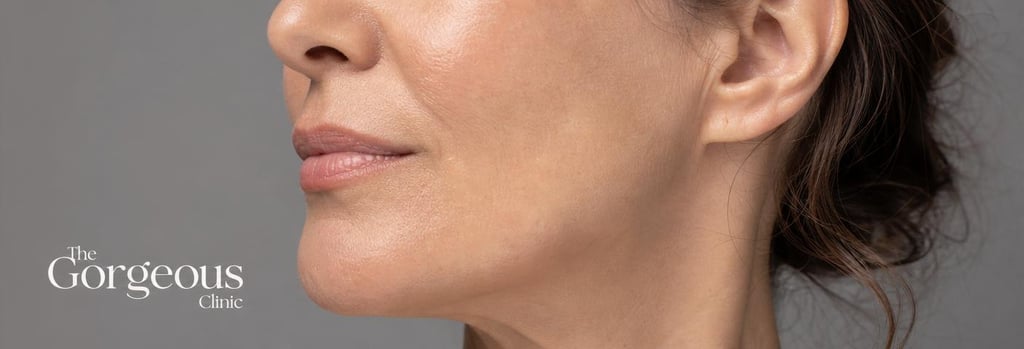
Visually, repeated and strong muscle activity can create a fuller or square lower face. This makes the jawline look wider when the width is caused mainly by muscle rather than bone. Not everyone with a wide jaw has an enlarged masseter; bone shape, facial fat and skin laxity are common alternatives to consider.
Visually, repeated and strong muscle activity can create a fuller or square lower face. This makes the jawline look wider when the width is caused mainly by muscle rather than bone. Not everyone with a wide jaw has an enlarged masseter; bone shape, facial fat and skin laxity are common alternatives to consider.
What masseter injections can do
Carefully placed prescription injections can relax the masseter muscle so it works less hard. Over weeks to months the muscle often softens and reduces in bulk, which can ease jaw tension and reduce grinding for some people. This is why some clients seek masseter treatment for jawline slimming as well as symptom relief.
Results are gradual. Injection works by reducing muscle activity rather than fixing a damaged joint. If your symptoms are mainly due to an overactive masseter, injections may help. For clicking, locking, bite problems, cracked teeth or severe pain you will also need dental or medical assessment.
Results are gradual. Injection works by reducing muscle activity rather than fixing a damaged joint. If your symptoms are mainly due to an overactive masseter, injections may help. For clicking, locking, bite problems, cracked teeth or severe pain you will also need dental or medical assessment.

Who is suitable and what limits to expect
Suitability depends on what is causing the jaw width or pain. If the fullness comes mainly from bone shape, facial fat, higher body fat, jowling or skin laxity, masseter injections will have a limited jaw-slimming effect. They help where the masseter muscle itself is a significant contributor.
We always assess face-to-face, feel the masseter at rest and during clench, and check jaw movement. Treatment is only recommended when we believe it will genuinely help. If you have dental damage, persistent severe pain, or mechanical jaw problems, we will advise dental or medical referral.
We always assess face-to-face, feel the masseter at rest and during clench, and check jaw movement. Treatment is only recommended when we believe it will genuinely help. If you have dental damage, persistent severe pain, or mechanical jaw problems, we will advise dental or medical referral.

What to expect at consultation and aftercare
A consultation includes medical history, a focused jaw and dental check, and a palpation of the masseter muscle. We ask about teeth grinding, headaches, dental work and any prior treatments for TMJ or TMD. Photos and measurements may be taken to track change.
After injections you may feel mild tenderness for a day or two. Muscle relaxation develops over 2 to 6 weeks and lasts months, with repeat treatments often needed to maintain effect. If you are considering treatment, a consultation is the safest place to start. The Gorgeous Clinic serves Blackpool, the Fylde Coast and Lancashire and assesses each client carefully.
After injections you may feel mild tenderness for a day or two. Muscle relaxation develops over 2 to 6 weeks and lasts months, with repeat treatments often needed to maintain effect. If you are considering treatment, a consultation is the safest place to start. The Gorgeous Clinic serves Blackpool, the Fylde Coast and Lancashire and assesses each client carefully.