Polynucleotides or Profhilo for Crepey, Tired Skin?
Jenna Hickson
minute read
Back to blog
You want fresher, smoother skin but you are worried about over-treatment and wasted money. Polynucleotides and Profhilo are two popular options for improving skin quality, hydration and mild laxity, but they work differently and suit different concerns. Read on for a straight-talking comparison of how each works, where they help most (yes, that includes the under-eye and neck), what to expect from treatment courses, and why a clinic consultation is the sensible next step.
Polynucleotides or Profhilo for Crepey, Tired Skin?, What each treatment is
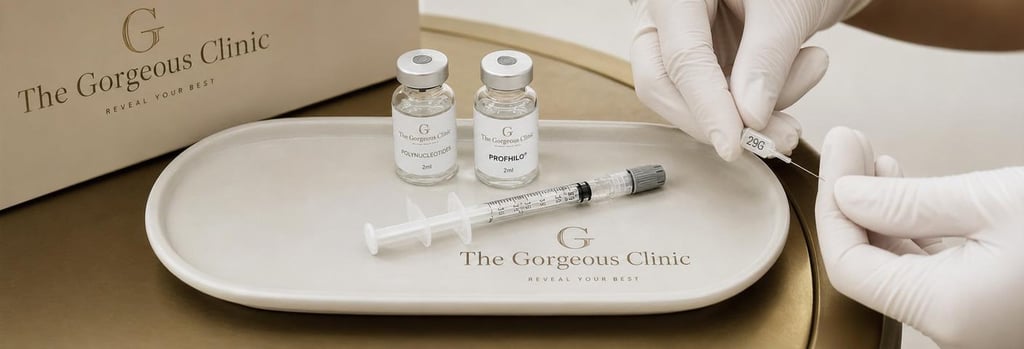
Polynucleotides are injectable preparations made from long chains of nucleotides. They aim to support cellular repair and skin regeneration, and clinics often use them very superficially for delicate areas such as the under-eye. Results are marketed as improved skin quality and texture rather than obvious plumping.[1]
Profhilo is a high-concentration hyaluronic acid product that spreads through the skin to deeply hydrate and provide a mild lifting effect through stimulation of the surrounding tissue. It is usually placed using the Bio Aesthetic Points, or BAP, technique to encourage even diffusion and remodelling.[2]
Both are intended to improve skin quality, but they use different active materials and injection approaches which affects where we would recommend them.
Profhilo is a high-concentration hyaluronic acid product that spreads through the skin to deeply hydrate and provide a mild lifting effect through stimulation of the surrounding tissue. It is usually placed using the Bio Aesthetic Points, or BAP, technique to encourage even diffusion and remodelling.[2]
Both are intended to improve skin quality, but they use different active materials and injection approaches which affects where we would recommend them.
How results differ
Polynucleotides aim to improve skin quality at a cellular level, which can soften crepey texture and reduce the look of tired, thin skin. Changes tend to be gradual, usually needing a short course of treatments, and results focus on texture, glow and skin thickness more than visible lifting.[1]
Profhilo provides deep hydration and a smoothing, tightening effect as the product spreads. Many patients notice improved hydration and a subtle firmer feel after the standard two-session protocol, with results often visible sooner than with polynucleotides. Profhilo is not a filler for volume replacement, it is a bioremodelling treatment intended for overall skin quality and laxity improvement.[2]
Profhilo provides deep hydration and a smoothing, tightening effect as the product spreads. Many patients notice improved hydration and a subtle firmer feel after the standard two-session protocol, with results often visible sooner than with polynucleotides. Profhilo is not a filler for volume replacement, it is a bioremodelling treatment intended for overall skin quality and laxity improvement.[2]
Who they suit, area by area
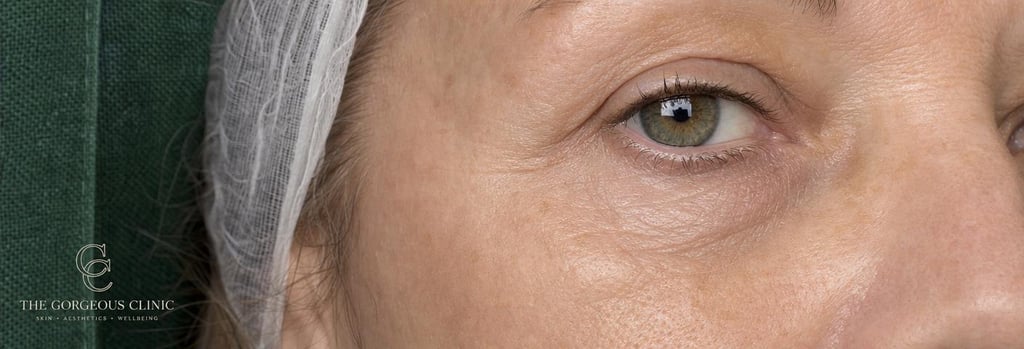
Under-eye and crepey eyelid skin: We generally use polynucleotides around the eyes because they are formulated for very superficial, delicate areas and can improve texture without obvious swelling. Collagen induction techniques such as gentle microneedling can be an excellent complement for the under-eye area too.[1]
Cheeks, mid-face and general facial skin: Profhilo (using the BAP technique) works well when the goal is overall hydration and mild skin tightening across larger areas. It is suited to patients with skin laxity and dryness who want a subtle, natural improvement rather than volume. For the neck, smooth PDO threads are often an excellent option for lifting and firming where sagging is more pronounced.[2]
A consultation helps decide which area benefits most from which approach, or whether a combination is best.
Cheeks, mid-face and general facial skin: Profhilo (using the BAP technique) works well when the goal is overall hydration and mild skin tightening across larger areas. It is suited to patients with skin laxity and dryness who want a subtle, natural improvement rather than volume. For the neck, smooth PDO threads are often an excellent option for lifting and firming where sagging is more pronounced.[2]
A consultation helps decide which area benefits most from which approach, or whether a combination is best.
Treatment course and downtime
Polynucleotides: Most clinics recommend a short series of sessions spaced a few weeks apart. Expect mild bruising and tenderness at injection points for a few days. Results build over several weeks to months as skin quality improves.
Profhilo: The common protocol is two treatments, four weeks apart, using the BAP technique. Downtime is usually minimal, though temporary swelling or small lumps can occur while the product disperses. Most people return to normal activities the same day, with visible improvement in hydration within a few weeks.[2]
Both treatments need realistic expectations. They are not substitutes for surgical correction where significant sagging or volume loss exists.
Profhilo: The common protocol is two treatments, four weeks apart, using the BAP technique. Downtime is usually minimal, though temporary swelling or small lumps can occur while the product disperses. Most people return to normal activities the same day, with visible improvement in hydration within a few weeks.[2]
Both treatments need realistic expectations. They are not substitutes for surgical correction where significant sagging or volume loss exists.